Not all silver certificates are created equal. Two notes from the same general era can look nearly identical to an untrained eye but carry very different values in the collector market. Understanding what separates a common $2 note from a genuinely scarce one — and why certain characteristics drive premium pricing — helps collectors and sellers make informed decisions.
Introduction
Silver certificate values are not arbitrary. They follow patterns rooted in scarcity, historical significance, physical condition, and specific identifying features. Some of these factors are immediately visible; others require closer examination. This article breaks down each variable and explains how it influences what a silver certificate is actually worth.
Scarcity: Print Runs and Survival Rates
The most fundamental driver of value in any collectible is scarcity — how many examples exist relative to how many people want them.
For silver certificates, scarcity operates on two levels. The first is the original print run: some series and sub-series were printed in far smaller quantities than others. The Series 1935A "R" and "S" experimental notes, for example, were issued in limited quantities specifically to test different paper stocks. Original print runs numbered in the hundreds of thousands rather than the billions typical of common series. That scarcity is baked in from the start.
The second level is survival rate. Even notes printed in large quantities can become scarce if most examples were spent, worn out, and ultimately destroyed. Large-size silver certificates from the late 19th and early 20th centuries were printed in substantial numbers, but relatively few survived in collectible condition after decades of active circulation. Survival rate often matters more than original print run when assessing true scarcity.
Denomination
Denomination is a straightforward scarcity indicator. Higher-denomination silver certificates were printed in smaller quantities than lower-denomination ones, and they were used more carefully — people were less likely to fold, crumple, or discard a $10 or $50 note than a $1 bill.
As a general rule, value increases with denomination across comparable series and conditions. A $5 silver certificate from a common series will typically be worth more than a $1 note from the same series in the same grade. A $10 note more than a $5. The large denominations — $20, $50, and $100 — are scarce enough that even heavily circulated examples carry meaningful premiums.
The $1 denomination is overwhelmingly the most common, accounting for the vast majority of silver certificates encountered today. Anyone holding a higher-denomination note should treat it as potentially more significant before assuming it is common.
Series Year and Sub-Series
Within the $1 denomination alone, values vary considerably by series. The Series 1957 and Series 1935 notes are extremely common — billions were printed and many survived. Early small-size series from 1928 through 1934 are less common across the board, and certain sub-series within those years were produced in relatively small numbers.
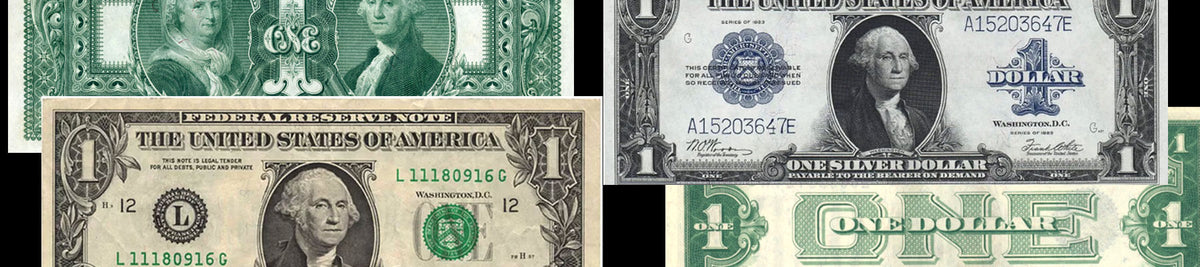
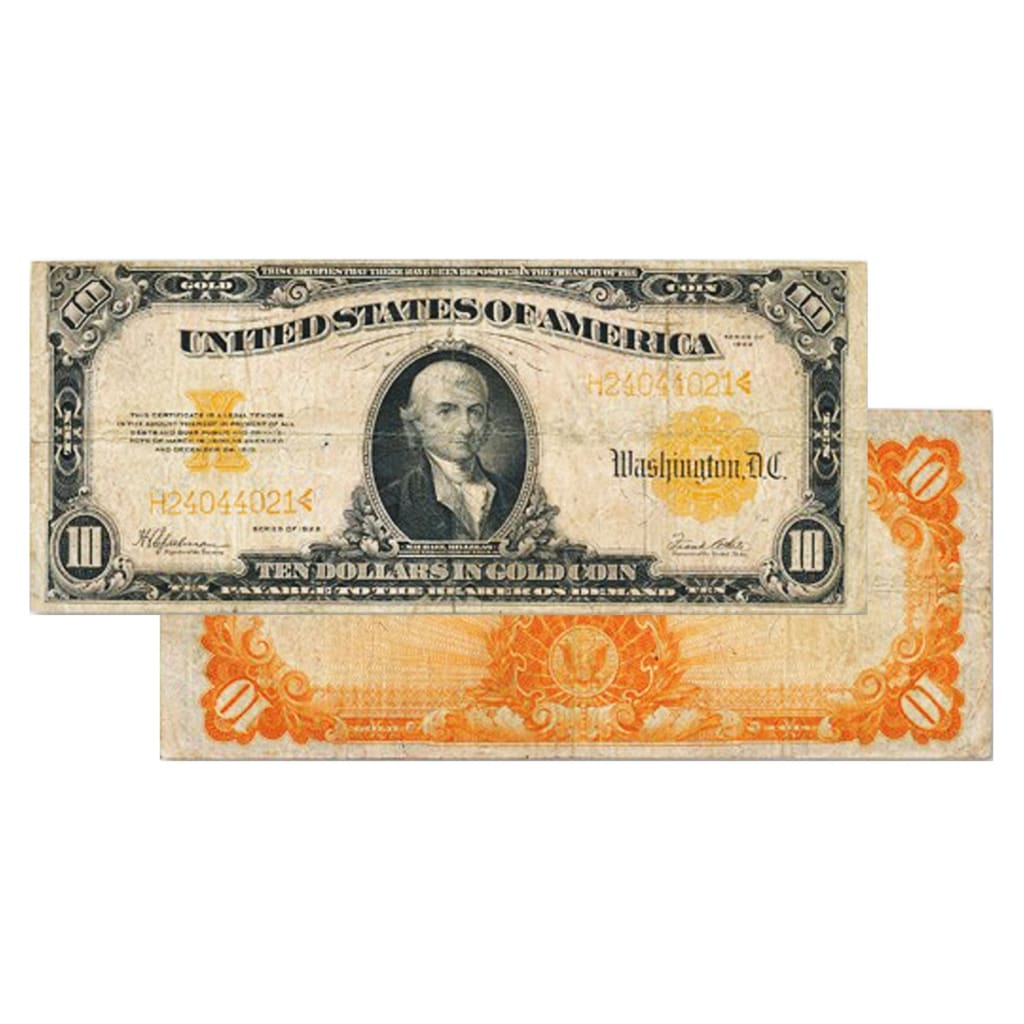
Large-size silver certificates, issued prior to the 1928 currency redesign, represent a separate and generally more valuable category. These notes feature ornate engraved designs — some series, such as the 1896 "Educational Series", are considered among the most beautifully designed American currency ever produced. Values for collectible large-size notes start significantly higher than for common small-size examples, even in circulated condition.
Within any given series, sub-series variations matter. A Series 1935E note is common; a Series 1935F or 1935G is somewhat less so. These distinctions are tracked in standard currency references and price guides.
Star Notes
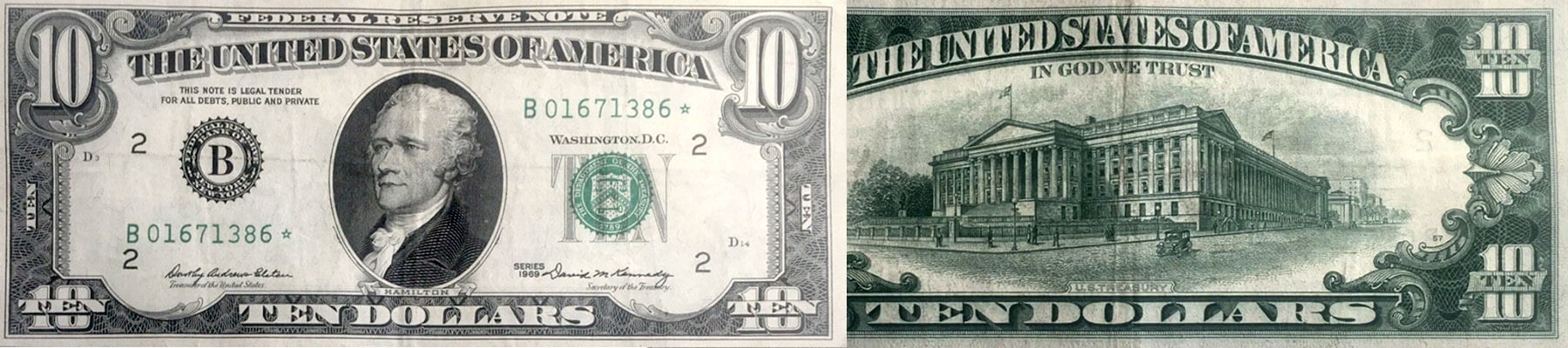
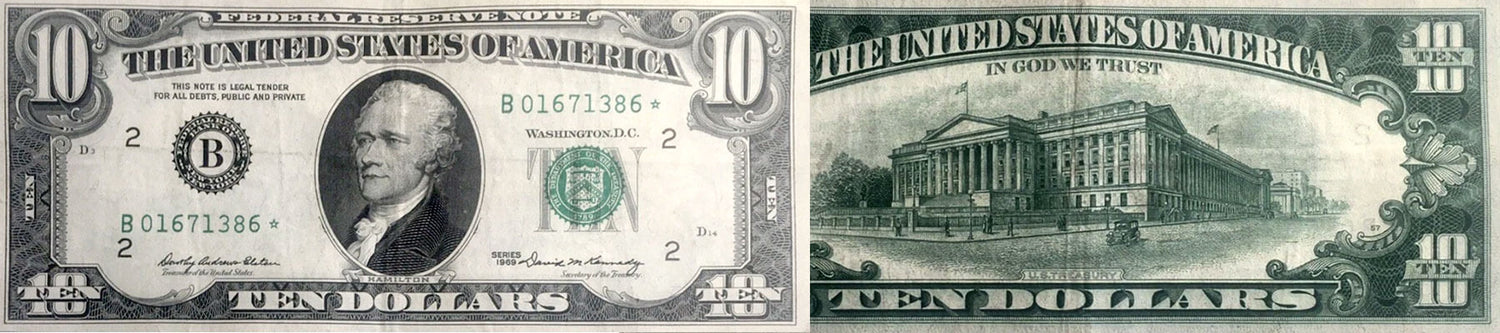
Star notes are replacement notes — printed to substitute for notes that were damaged during the production process. They are identifiable by a star symbol (★) at the beginning or end of the serial number, depending on the era.
Because star notes are produced specifically to fill gaps in sequential serial number runs, they are always printed in smaller quantities than regular notes. The degree of scarcity varies. Some star note runs for common series are still quite abundant, while others — particularly for earlier series or notes from smaller Federal Reserve districts — are genuinely rare.
A star note version of any silver certificate will typically command a premium over the equivalent regular note. For common series in average condition, the premium may be modest. For scarce star note runs or high-grade certified examples, premiums can be multiples of the regular note price.
Any silver certificate with a star in the serial number deserves closer examination before being treated as a common example.
Condition and Grade
Condition is the great equalizer in the silver certificate market. A common series note in exceptional condition can be worth far more than a scarce series note in poor condition.
Paper currency collectors use a standardized grading scale. Key reference points include:
- Very Fine (VF) — The baseline for a presentable collectible. Folds present but note is clean and crisp overall.
- Extremely Fine (EF/XF) — Only minor folds. Strong eye appeal.
- About Uncirculated (AU) — Barely handled. Virtually no folds.
- Uncirculated (MS/CU) — No folds, original crispness. The highest tier.
For common series, the difference between a circulated and an uncirculated example may be modest in absolute dollar terms. For scarcer series, the same grade jump can represent hundreds of dollars. Third-party grading and certification from services such as PMG or PCGS Currency provides standardized, trusted assessments for notes where the value justifies the cost.
Signatures and Varieties
Each silver certificate carries the printed signatures of the Treasurer of the United States and the Secretary of the Treasury at the time of printing. Different signature combinations correspond to different production periods within the same series, and some signature combinations are significantly scarcer than others.
For example, within the Series 1935A notes, different signature pairs — such as Julian/Morgenthau versus Julian/Vinson — reflect different production windows. Collectors tracking complete sets by signature variety need examples of each combination, which drives demand for scarcer signature pairings.
Identifying the signature combination on any silver certificate is a straightforward step that can meaningfully affect assessed value.
Special Issues and Overprints
Certain silver certificates were produced for specific purposes that make them historically distinctive and collectible beyond their standard series status.
World War II overprint notes are among the most notable. $1 silver certificates with "HAWAII" overprinted on the face and back were issued for use in Hawaii following the attack on Pearl Harbor, so they could be declared worthless if captured by enemy forces. Similarly, North Africa overprint notes with a yellow treasury seal were issued for use by Allied forces in North Africa. Both types are significantly more valuable than standard notes of the same series.
The 1934A $1 silver certificate with "HAWAII" overprint is among the most recognized wartime currency issues and is a staple of serious paper money collections.
Conclusion
Value in silver certificates follows a consistent logic: scarcity, condition, denomination, and special characteristics all compound on one another. A scarce series note in excellent condition with a star serial number represents multiple premium factors simultaneously. A common series note in average condition represents none. Learning to identify these factors quickly allows collectors and sellers to recognize what they have — and to avoid underselling something genuinely significant.