The Series 1957 $1 silver certificate is the last widely circulated silver certificate series issued by the United States Treasury. Printed in three sub-series across the late 1950s and early 1960s, these notes are extremely common — and for most examples in average condition, values reflect that. Yet condition and star note status can still make a meaningful difference, and understanding the full picture helps anyone holding one of these notes make an informed assessment.
What Is a Series 1957 Silver Certificate?
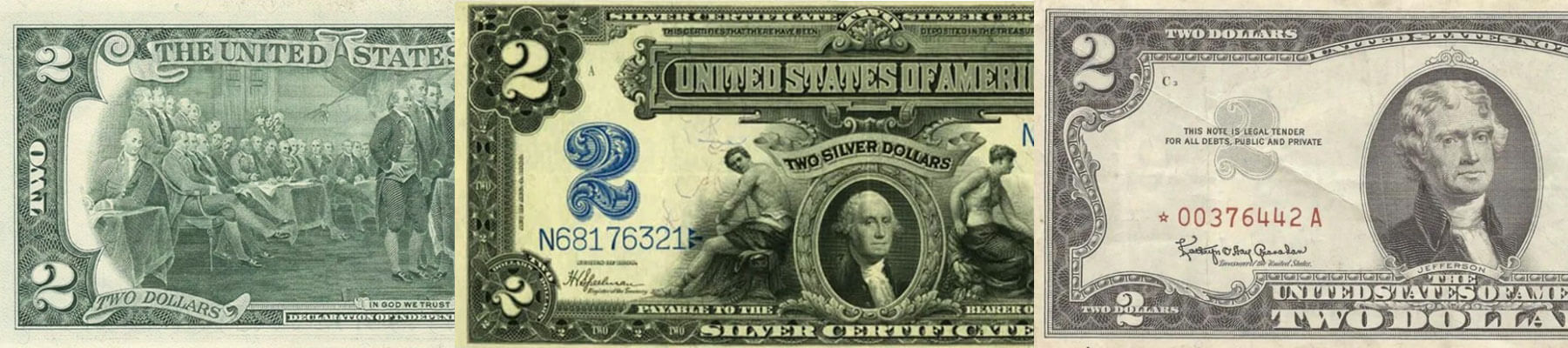
The Series 1957 $1 silver certificate shares its basic design with the earlier 1935 series: George Washington on the obverse, the blue treasury seal and blue serial numbers that identify all silver certificates, and the designation "Silver Certificate" printed across the top of the note.
The series was issued in three sub-series: 1957, 1957A, and 1957B. Each reflects a different pairing of Treasury signatures — the printed signatures of the Treasurer of the United States and the Secretary of the Treasury appearing on the face of every note.
Production of the 1957 series ran from the late 1950s until silver certificate production was formally ended in 1964, with the final Series 1957B notes among the last silver certificates printed.
The Three Sub-Series
- Series 1957 — The original issue, carrying the signatures of Priest and Anderson. Produced in very large quantities. Common in all circulated grades and readily available in uncirculated condition.
- Series 1957A — Signatures of Smith and Dillon. Also produced in large quantities and commonly encountered. Essentially identical in collector value to the original 1957 in most grades.
- Series 1957B — Signatures of Granahan and Dillon. The final sub-series and, by some accounts, the last $1 silver certificates produced before the series ended. Also common, though slightly less so than the two preceding sub-series. In high grades, 1957B notes may carry a small premium over standard 1957 examples.
What Are 1957 Silver Certificates Worth?
For the vast majority of 1957 silver certificates encountered in average circulated condition, values are modest. These are among the most abundant collectible notes in existence, and dealer prices reflect that supply.
Standard 1957, 1957A, and 1957B notes:
- Heavily circulated (Good to Fine) — $1.25 to $2.50
- Very Fine — $2.50 to $5.00
- Extremely Fine — $4.00 to $8.00
- About Uncirculated — $7.00 to $15.00
- Uncirculated (ungraded) — $10.00 to $20.00
- Certified gem uncirculated (PMG/PCGS MS-65 or higher) — $25.00 to $60.00+
These ranges apply to standard notes in typical condition. Notes with exceptional eye appeal, original crispness, and strong centering at the high end of the uncirculated range can exceed these figures when certified.
Star Notes
Star notes exist within all three 1957 sub-series and carry premiums over standard examples. The size of that premium depends on the sub-series and grade.
For common 1957 and 1957A star notes in circulated condition, premiums are modest — typically $3 to $10 over regular note prices in comparable grades. In uncirculated condition, star note premiums increase, and certified gem star notes from the 1957 series can sell for $50 to $100 or more depending on the specific sub-series and grade.
Series 1957B star notes are somewhat scarcer than 1957 and 1957A stars, and this relative scarcity is reflected in premium pricing, particularly for uncirculated certified examples.
As with all silver certificates, the presence of a ★ in the serial number is the identifying feature. Any 1957 series note with a star warrants closer attention before being treated as a standard common example.
How the 1957 Series Compares to the 1935 Series
Collectors often ask whether 1957 or 1935 notes are more desirable. For common examples in circulated condition, both series are similarly valued — the difference is minimal. In the higher grades, the 1935 series has a slight edge in collector interest due to its longer history, greater variety of sub-series, and the existence of specialty issues like the experimental "R" and "S" notes.
For star notes specifically, certain 1935 sub-series star notes are scarcer than any 1957 star notes, which can push 1935 star premiums higher for those specific varieties.
For most people who find a silver certificate, the practical difference is small. A common circulated 1957 and a common circulated 1935A are both worth similar amounts. The gap opens at the high end of the grade scale and in specialty varieties.
"In God We Trust" and Design Notes
One minor but frequently noticed detail: Series 1957 notes were among the first $1 notes to include the motto "In God We Trust" on the reverse. This motto was added to paper currency in 1957, and 1957 silver certificates — as the $1 notes in active production at that time — reflect this change.
Earlier silver certificates, including all 1935 sub-series and prior, do not carry this motto. This is an easy visual distinction that can help date a note when the series designation is not immediately visible.
Identifying a 1957 Silver Certificate
Key identifying features:
- "Silver Certificate" printed at the top of the face
- Blue treasury seal on the right side of the face
- Series year (1957, 1957A, or 1957B) printed to the right of Washington's portrait
- Blue serial numbers — if the serial numbers are green, the note is a Federal Reserve Note, not a silver certificate
- "In God We Trust" on the reverse — present on all 1957 series notes, absent on all 1935 series notes
Are 1957 Silver Certificates Worth Keeping?
For common circulated examples, the answer is a matter of personal interest rather than significant financial return. Most 1957 silver certificates in average condition are worth only a few dollars above face value. They are not rare, and they are not likely to become dramatically more valuable over time for common examples.
Where they become worth holding — or worth examining more closely — is in uncirculated condition, as certified gem examples, or when the serial number contains a star. In those cases, the premium over face value justifies treating the note as a collectible rather than currency.