Silver certificates are among the most recognizable pieces of old United States currency still in circulation today. Millions of Americans have encountered one tucked inside an old wallet, inherited in an estate, or found at the bottom of a drawer — yet few know exactly what they are, where they came from, or why they look different from modern bills. This article explains what silver certificates are, how they worked, and what distinguishes them from other U.S. currency.
What Is a Silver Certificate?
A silver certificate is a form of legal tender paper currency issued by the United States government. Unlike the Federal Reserve Notes in use today, silver certificates were commodity-backed — meaning each note was tied to a specific quantity of silver held in reserve by the U.S. Treasury.
In practical terms, a person holding a silver certificate could, for most of the currency's history, walk into a bank or federal facility and exchange it for actual silver. The note itself was essentially a paper claim on physical metal.
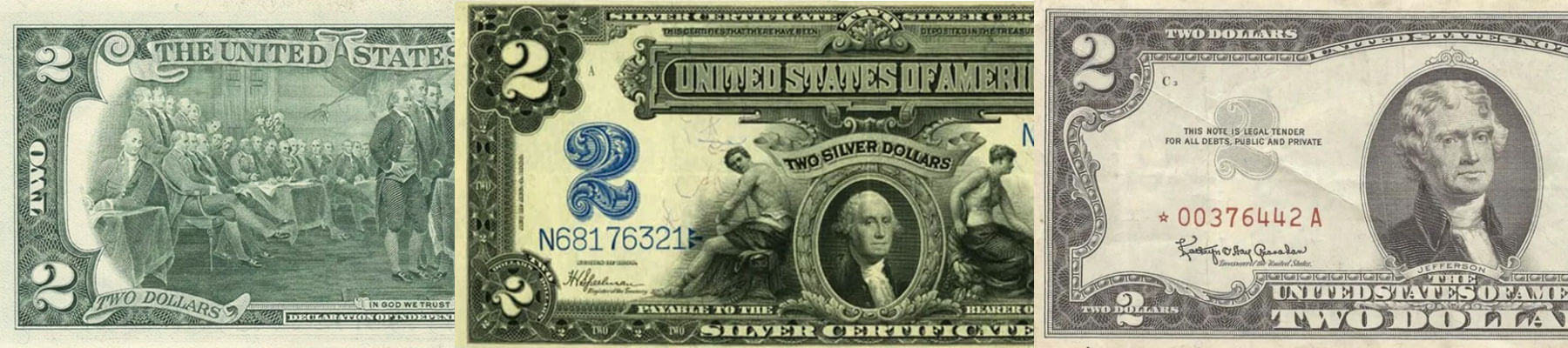
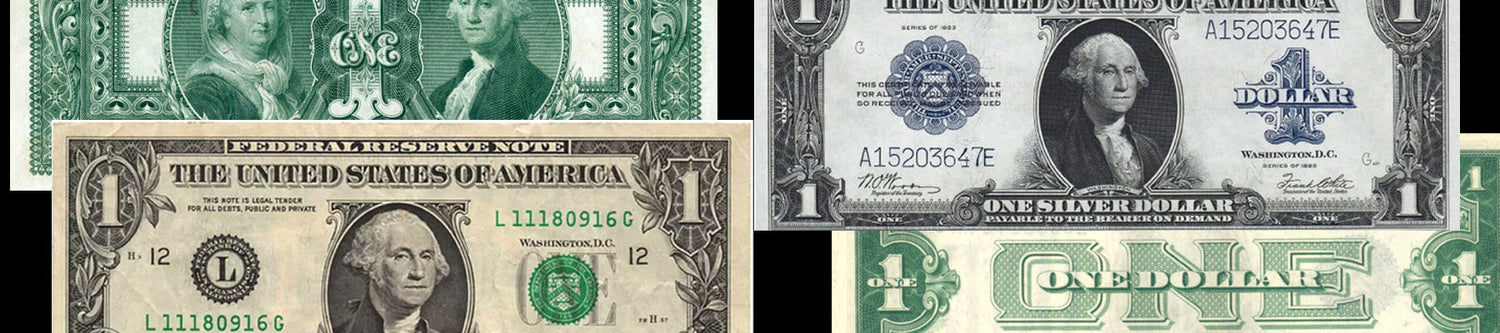
Silver certificates were printed in denominations of $1, $2, $5, $10, $20, $50, and $100, though the $1 note is by far the most commonly encountered today. They are identifiable by the blue treasury seal and blue serial numbers printed on the face — a distinct contrast to the green markings on Federal Reserve Notes. The text on the face of the note reads "Silver Certificate" prominently, and earlier series included language explicitly stating the note was redeemable in silver.
The Origins of Silver Certificates
Silver certificates were a direct product of post-Civil War economic politics.
In the decades following the Civil War, the United States operated on a gold standard, which limited the money supply and kept prices — and wages — low. Farmers, debtors, and silver-mining interests pushed hard for an expanded currency backed by silver, which was being mined in large quantities in the American West.
The result was the Bland-Allison Act of 1878, which required the U.S. Treasury to purchase a set amount of silver each month and issue paper certificates backed by it. This was the origin of the silver certificate as a formal currency instrument.
The program was expanded under the Sherman Silver Purchase Act of 1890, which increased silver purchases further. While that act was repealed in 1893 amid a financial panic, silver certificate production continued under various legislative frameworks for decades, with the final series issued in 1964.
How Silver Certificates Worked
The mechanics were straightforward. The Treasury purchased silver, deposited it in reserve, and issued paper notes representing that silver. Each note carried a face value — a $1 silver certificate represented one dollar's worth of silver held in trust.
For most of their history, silver certificates were fully redeemable. A holder could exchange the note for silver coin or, later, silver bullion. This redeemability was the defining feature that distinguished them from other paper currency of the era.
Over time, the redemption terms changed. By the mid-20th century, notes were redeemable for silver granules rather than coins. Congress ultimately ended silver redemption in June 1968, at which point silver certificates became legal tender only — spendable as currency but no longer exchangeable for silver.
The Series Years and Denominations
Silver certificates were issued across multiple series spanning nearly a century. The most widely circulated notes came from two major series:
Series 1935 — Issued across multiple sub-series (1935, 1935A through 1935H), this is one of the most abundant silver certificate series. The 1935A "R" and "S" experimental notes are among the more sought-after varieties.
Series 1957 — The last widely circulated $1 silver certificate series, issued in 1957, 1957A, and 1957B. These are extremely common in circulated condition.
Earlier series, including large-size notes issued before 1928, are significantly less common and generally of greater interest to collectors. Large-size silver certificates were printed on paper roughly the size of a modern dollar bill folded in half and feature more ornate designs than their small-size successors.
Higher denominations — particularly $5 and $10 silver certificates — were also issued across multiple series and tend to carry more collector interest than the common $1 notes.
How They Differ from Federal Reserve Notes
Federal Reserve Notes — the currency in use today — are issued by the Federal Reserve System and carry no commodity backing. They are supported by the monetary authority of the U.S. government rather than a physical reserve of metal.
Silver certificates, by contrast, were issued directly by the U.S. Treasury and backed by silver on deposit. Key visual differences include:
- Seal color — Silver certificates carry a blue treasury seal; Federal Reserve Notes carry a green seal
- Issuing authority — Silver certificates say "United States of America" without Federal Reserve language; Federal Reserve Notes identify the issuing district bank
- Face text — Silver certificates include the designation "Silver Certificate" across the top of the note
- Serial number color — Blue on silver certificates, green on Federal Reserve Notes
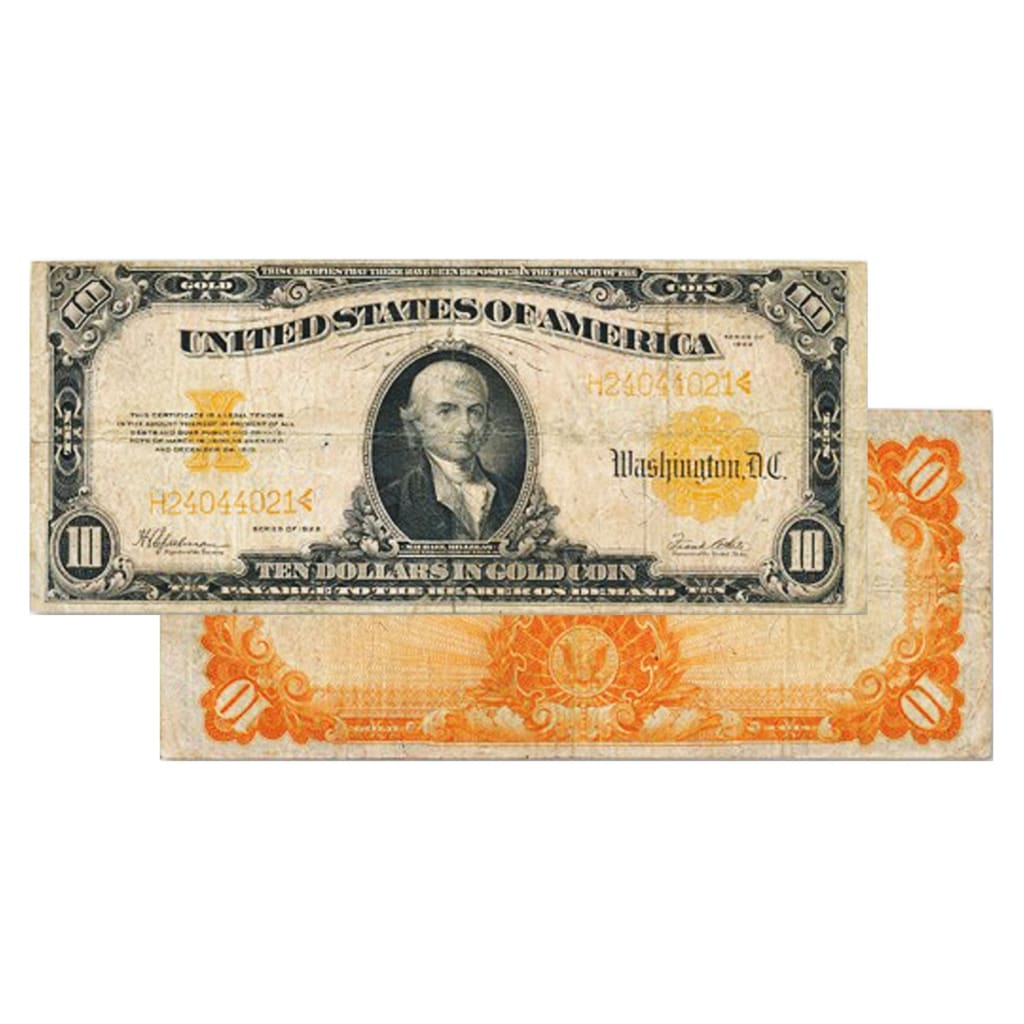
Gold certificates, another now-obsolete currency type, used a gold-colored seal and were backed by gold rather than silver.
Are Silver Certificates Still Legal Tender?
Yes. Silver certificates remain legal tender in the United States and can technically be spent at face value. In practice, no one spends them — even the most common examples are worth more than face value to collectors and dealers.
The right to redeem silver certificates for actual silver ended in 1968. Any silver certificate presented to a bank today would be accepted as currency at face value only, with no silver exchanged.
Why People Still Collect and Hold Them
Silver certificates occupy an interesting position in the collecting world. They are old enough to carry historical significance, common enough that most examples are accessible to new collectors, and varied enough in series and condition that building a complete collection requires real effort.
For investors, silver certificates offer a tangible connection to a period when U.S. currency was tied directly to a physical commodity. While they do not provide direct silver exposure today, their value as collectibles has held steady over time, and certain scarce varieties have appreciated meaningfully.
The most important factors affecting value are denomination, series year, condition, and whether the note is a star note — a replacement note identifiable by a star symbol at the end of the serial number. These topics are covered in detail in related articles.